

In February 2023 we published Data trends in inspection and maintenance. The argument was simple: collecting data is only half the job, and gigabytes are worth little until they are organised, located and put in front of the people who decide. That still holds. What has changed is how much of it now happens on a normal working day.
Here are five shifts we see.
1. Corrosion detection is part of the workflow, not a research project
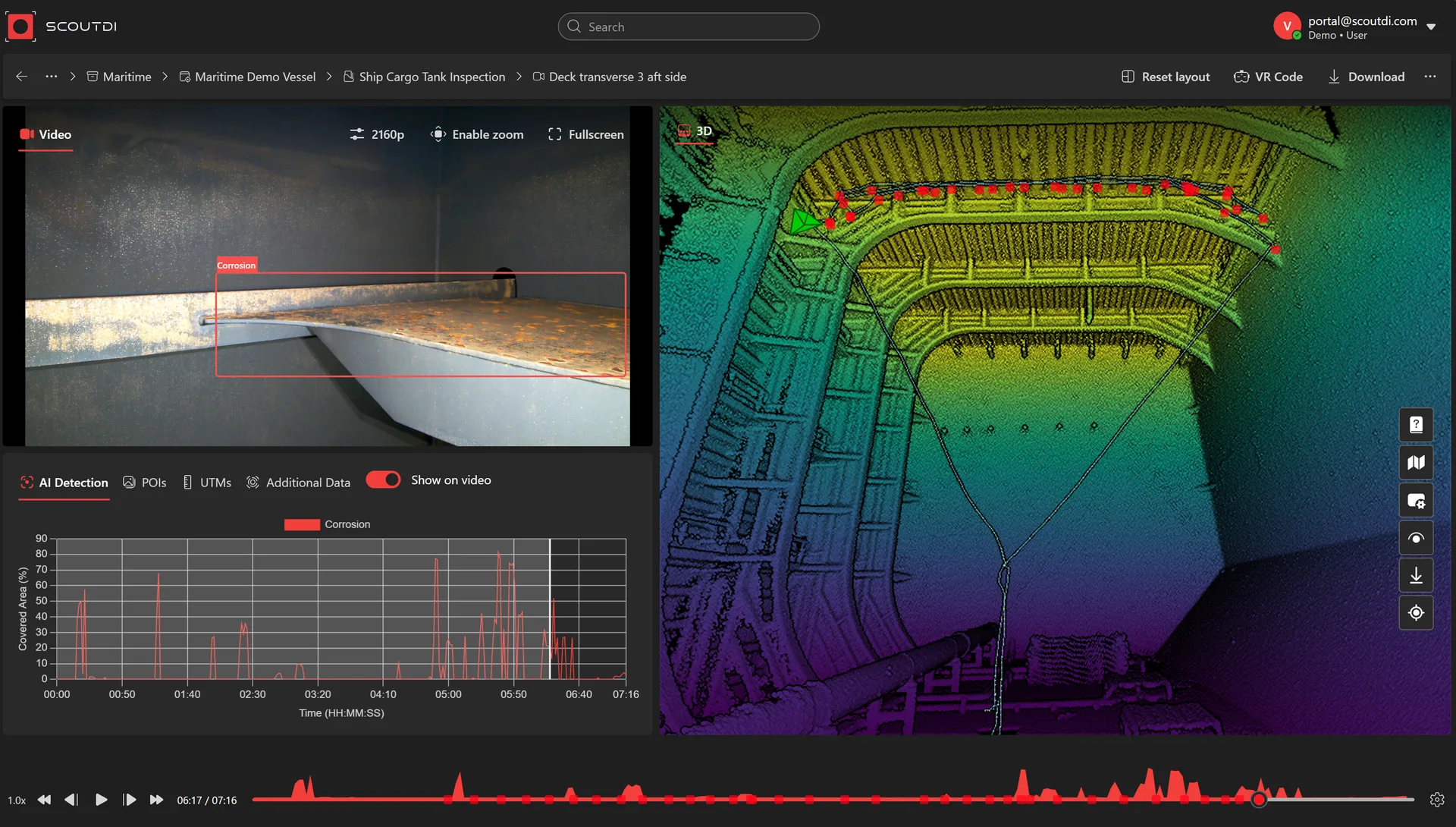
In 2023, machine learning in inspection was mostly a promise. Today Scout Portal runs machine learning corrosion detection on uploaded video. It is opt-in, trial-based and depends on the subscription plan, and it can be tailored by agreement.
Why it matters: a two-hour flight produces more video than anyone wants to scrub through frame by frame. Detection points the reviewer to where corrosion is likely, and because every frame is location-tagged, each hit sits at its position in the 3D point cloud. From there, one click turns a frame into a point of interest, and the report module builds a General Visual Inspection report as an editable Word file.
The model supports the inspector. It does not replace the inspector’s judgement or sign-off.
2. Offline-first and data security are buying requirements
Three years ago, security came up late in the conversation. Now it often comes first.
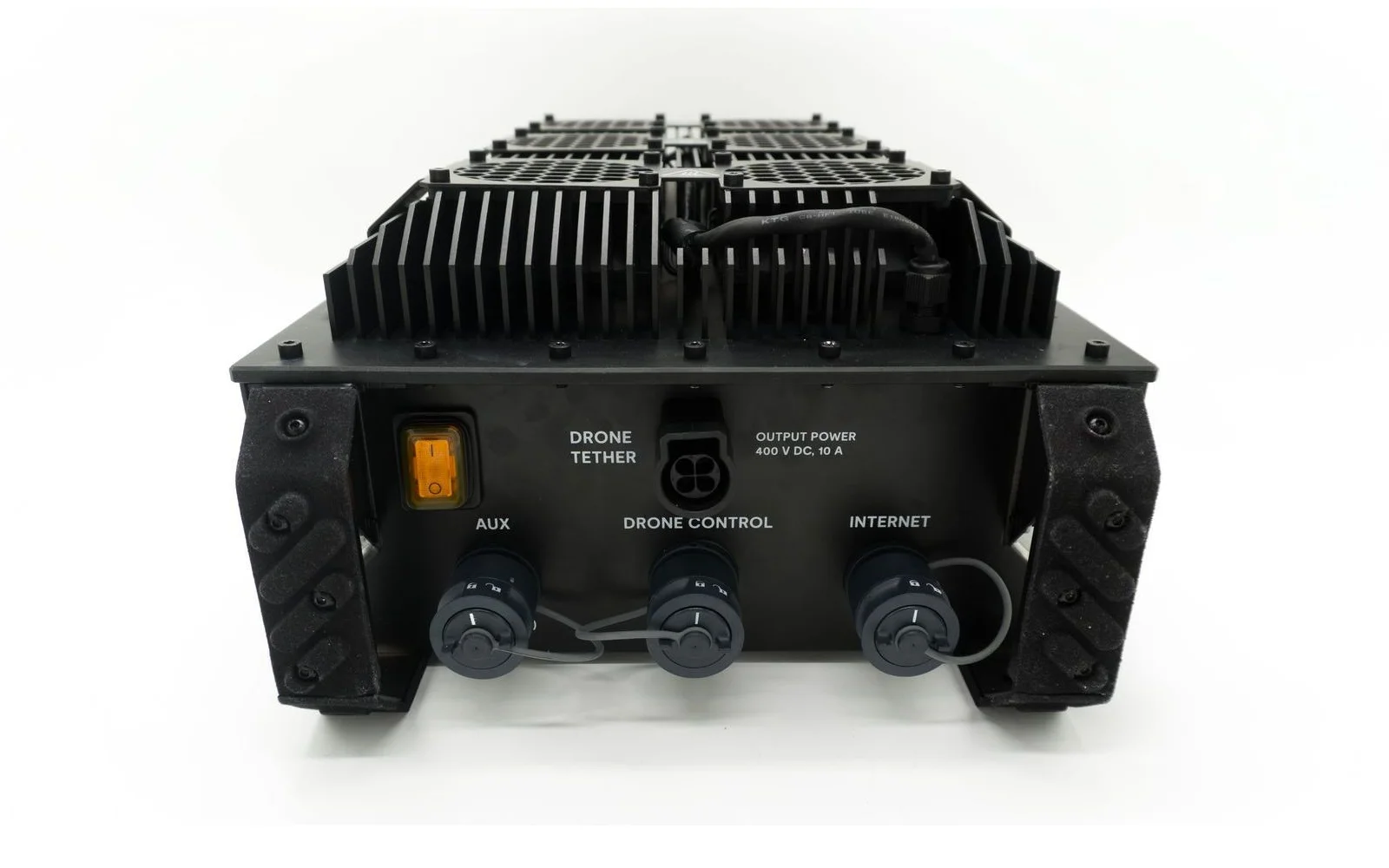
The Scout 137 answers this with physics rather than settings. The tether carries power and data, so there is no radio link to intercept, and the drone has no GPS receiver to spoof. Inspection data is written to the SD card in the drone, and nothing leaves it unless the operator connects the ground station to the internet. For a strict air gap, you simply leave that port unplugged. When data does go to the cloud, Scout Portal stores it geo-redundantly on Microsoft Azure with daily backups and encryption in transit and at rest, and ScoutDI is an ISO/IEC 27001-certified company.
Offline does not mean waiting until you are back at the office: Scout Viewer reviews the recording on site without internet, as described in section 4.
The full story is in Scout 137 data security: a fully wired path from capture to cloud.
3. LiDAR is a dataset, not just navigation
In the original article, LiDAR was mostly how the drone knew where it was and how photos got their location tags. That is still true, but the point cloud has become a deliverable in its own right.
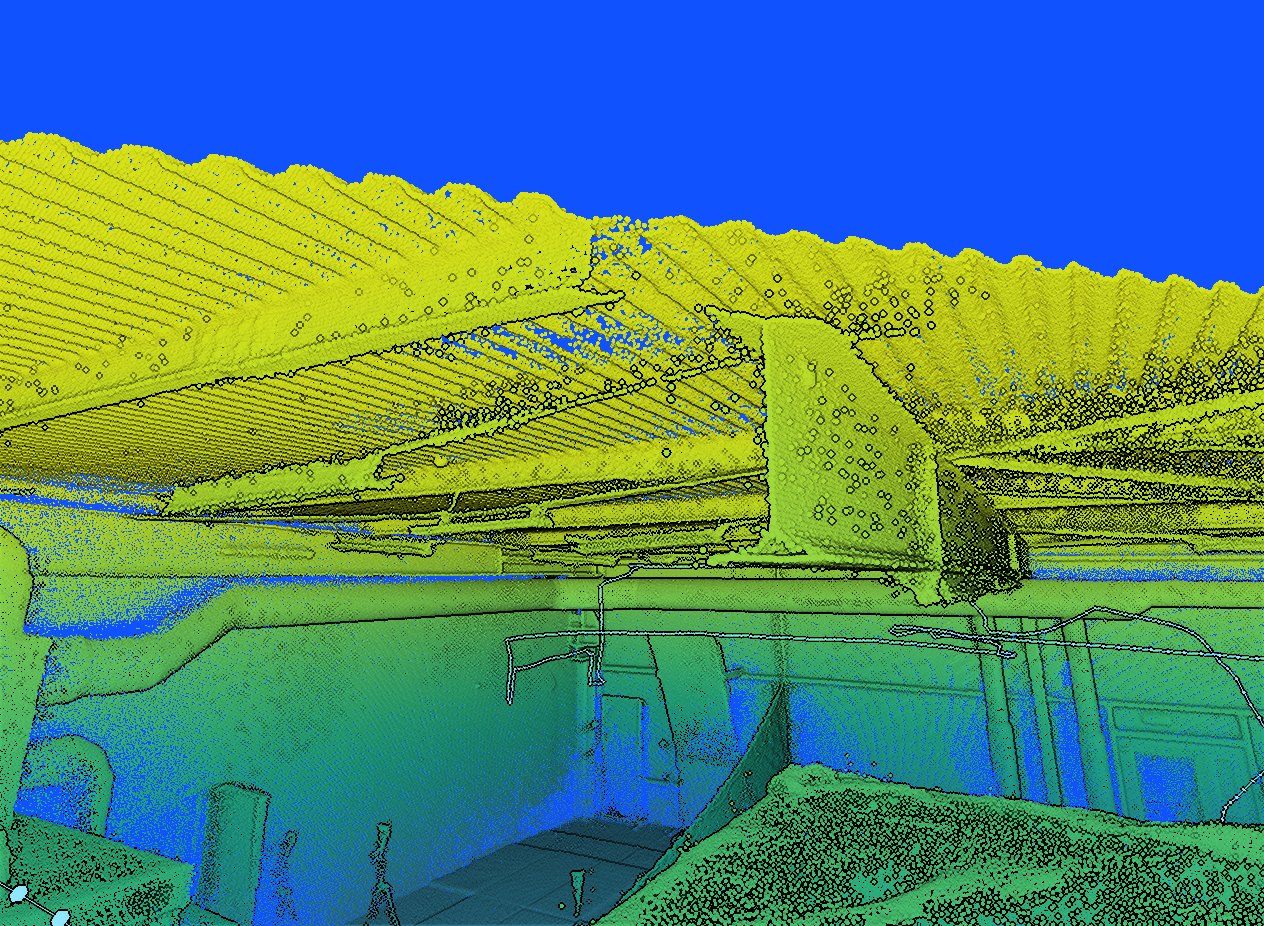
The Scout 137 Gen 3 carries a 128-beam Ouster OS0 LiDAR at up to 5.24 million points per second. After the flight, Scout Portal processes the recording with the HiFi Profile of Scout Spatial Engine, tuned for maximum point-cloud fidelity. Measured against a terrestrial laser scan, the result reaches USIBD LOA20, with no control points and no GNSS. You can download it in PCD, PLY, E57 or LAZ and open it in tools such as Autodesk ReCap, Leica Cyclone and common digital-twin platforms.
One flight can now feed visual inspection, dimensional checks and the digital twin the 2023 article talked about.
4. Review on site with Scout Viewer, share with Scout Portal
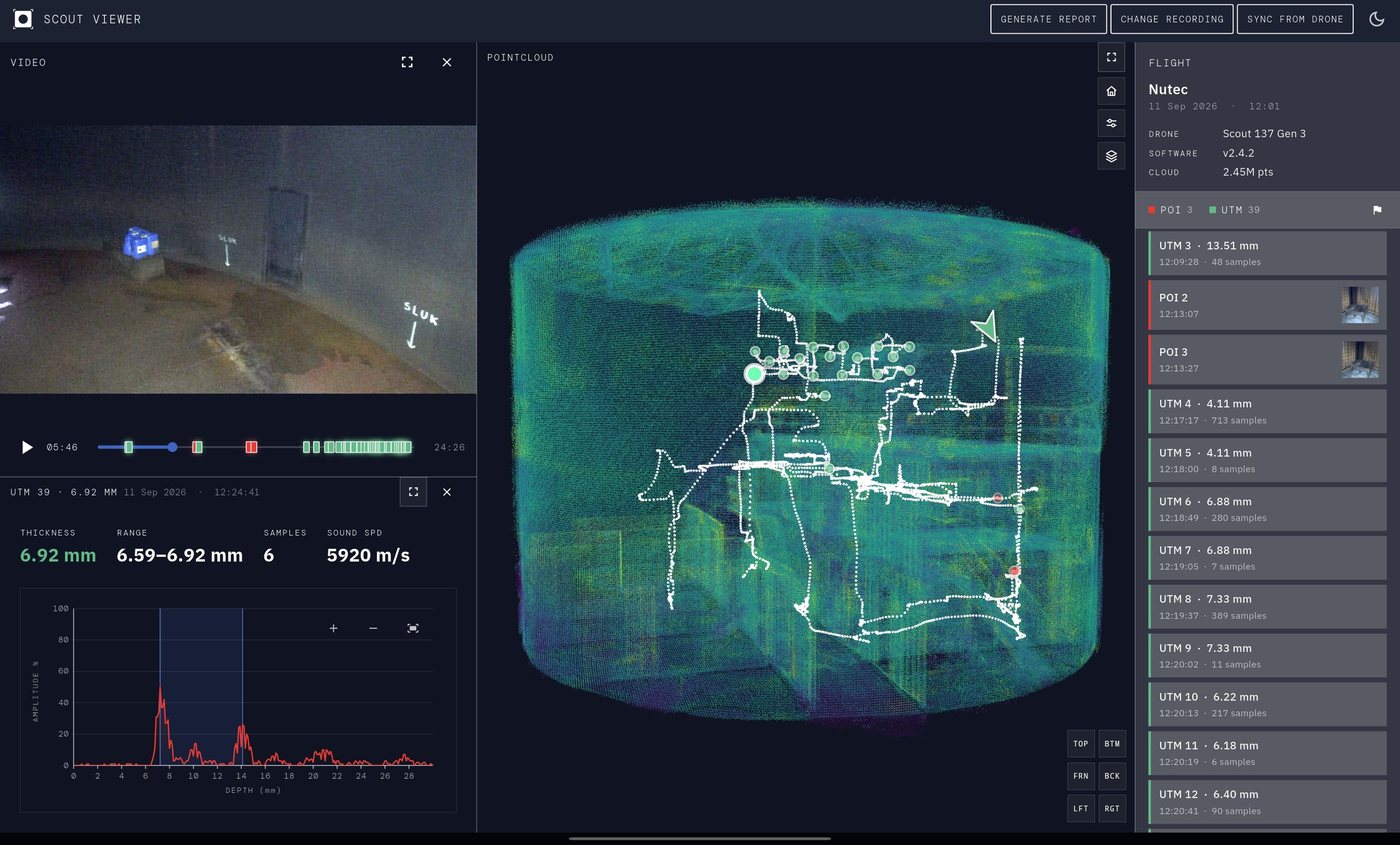
On site, before you leave: Scout Viewer opens the finished recording on the tablet you flew with, or from the SD card on a Windows PC. No login, no upload, no internet. The crew walks the customer through the 3D point cloud, tagged photos and UT thickness readings, and exports a PDF report on the spot.
Afterwards, with everyone else: Scout Portal is where the data is kept, compared and shared. Give read-only access to people outside your organisation, such as asset owners or class surveyors. They sign in with email verification. Annotate, report and compare with next year’s flight.
Viewer closes the loop on site. Portal keeps the data useful for years.
5. Offshore bandwidth is rarely the bottleneck
In 2023 satellite internet offshore was emerging. Today satellite and 4G/5G connections are no longer the exception.

When Hello Solticom inspected FPSO cargo tanks in Mexico, the entire two-hour flight was uploaded to Scout Portal over Starlink right after the drone came out of the tank, so stakeholders could review the data while the crew was still on site. Live streaming needs about 10 Mbps up-link, which a mobile phone over USB often delivers. Where the connection is poor, Scout Portal uploads are resumable and built for unreliable, low-bandwidth links. And where there is no connection at all, Scout Viewer still works.
Proof: Ørsted
The clearest example of the full chain, from data captured inside the foundation to maintenance decisions made from it, is still offshore wind. Ørsted uses the Scout 137 Drone System for inspections inside turbine foundations:
- The internal foundation segment went from about 2.5 hours to around 20 minutes.
- The team typically went from four people per turbine to three.
- Confined-space entry was avoided on sites where drone access is possible.
- Higher data volume and more consistent coverage made year-to-year trend analysis of stopper-plate spacing more reliable.
Safer and faster is good. Data you can compare from one year to the next is what turns inspection into maintenance planning. Read the full Ørsted case study.
What has not changed
You still have to collect the right data with enough coverage and precision. Garbage in is still garbage out, with or without machine learning. The difference is that the rest of the chain, from SD card to a shared, located record, now works out of the box.

