
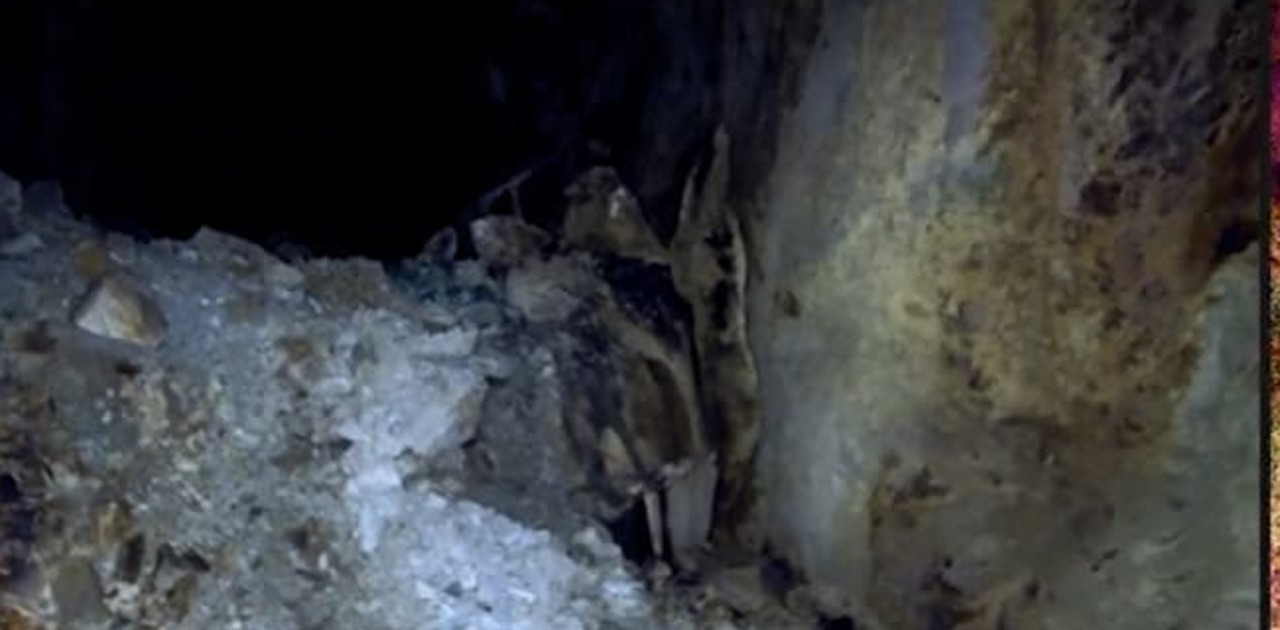
Active shafts & raises
Production shafts, service shafts and access raises. Lining condition, set spacing and steel guides surveyed without shaft-sinking crew exposure.
 Talk to us
Scout 137 Gen 3
Scout 137 Gen 2
Software
Content
Company
Active workings change every shift. Rockfall is the largest fatality cause in hard-rock mining. Scout 137 flies open stopes, blind raises and post-blast headings so the surveyor stays out of the line of fire and the production schedule keeps moving.
Where Scout 137 flies
Production shafts, service shafts and access raises. Lining condition, set spacing and steel guides surveyed without shaft-sinking crew exposure.
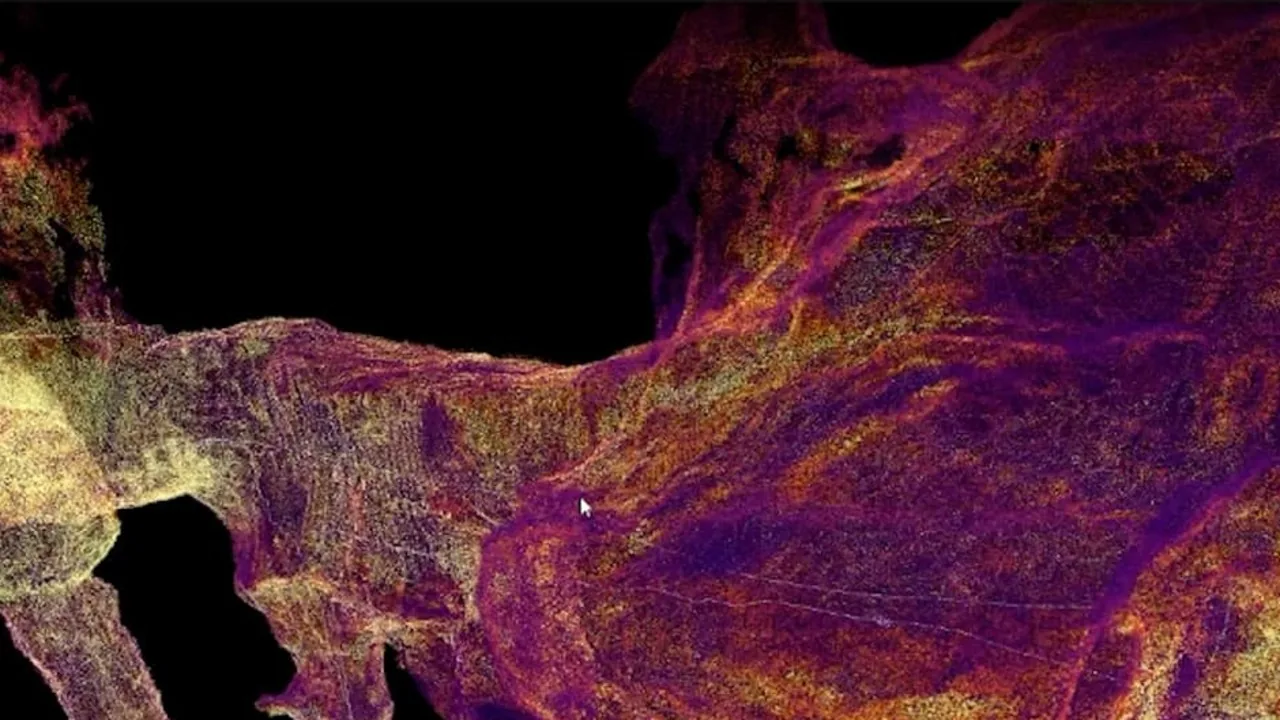
Cavity monitoring after blast, dilution mapping and hangingwall stability. Survey-grade point cloud captured from a safe stand-off in the access drive.
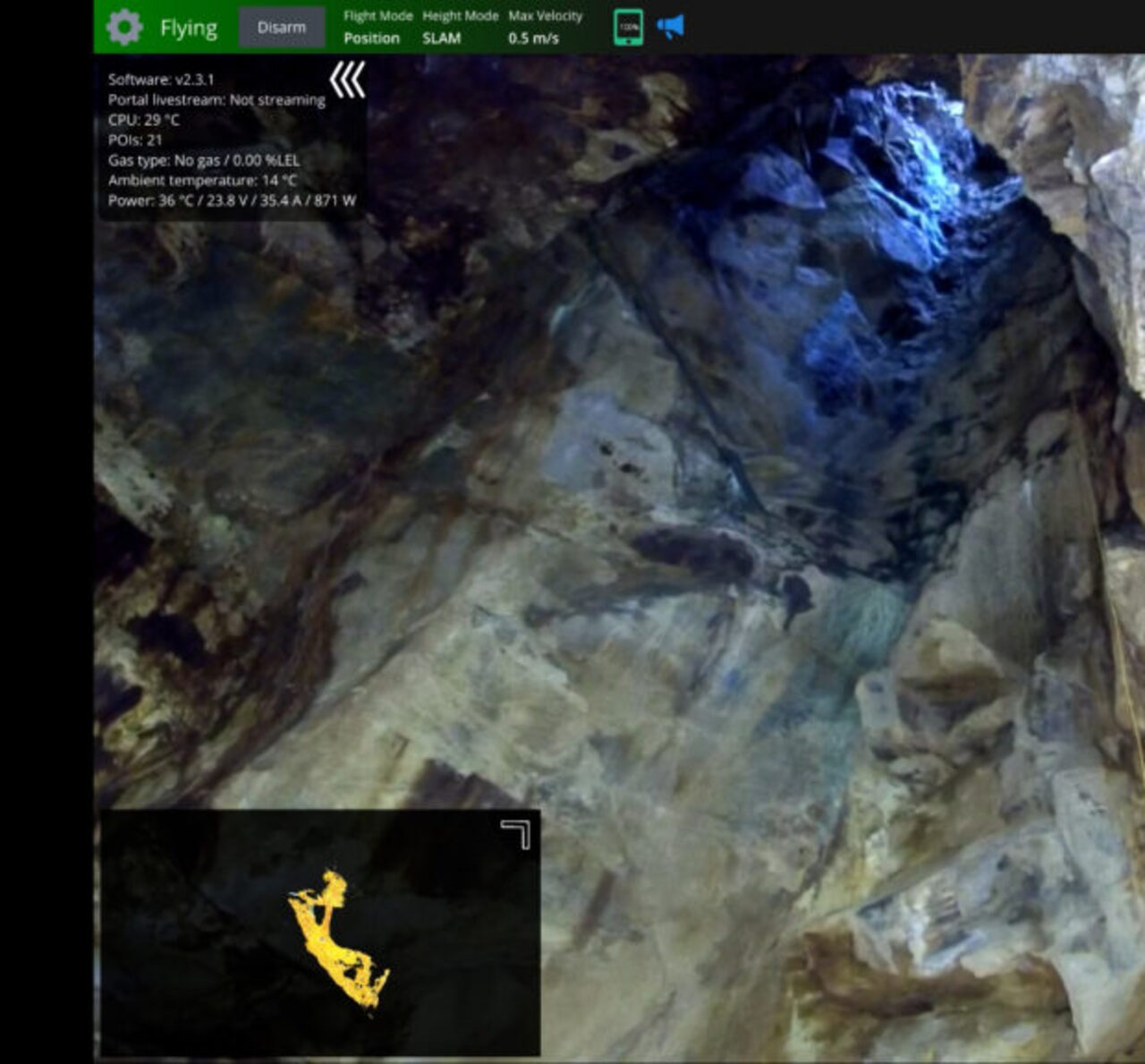
Blind raises, ore passes and return airways. Cross-section profile, blockage check and lining condition without a crew rigging access from the top.
Decant towers, outlet works and underdrain galleries. Inspection-grade evidence for the TSF dossier without dewatering the impoundment.
The challenge today
30%
Of underground hard-rock fatalities involve rockfall or ground failure.
5–7 days
Of manual ventilation survey on a mid-size operation each year.
60 min
Typical atmosphere clearance wait after blast before crews can re-enter.
8 hr+
Lost production per re-entry delay when an inspector can't get to the heading.
A drone in the heading after a blast is the difference between a production shift and a stand-down. Scout 137 turns post-blast re-entry from a wait into a workflow.
How Scout 137 changes it
Three capture streams from one tethered drone, flown from a safe stand-off in the access drive. The production geologist, the ventilation engineer and the mine captain all get what they need from a single flight.
See
Hangingwall, brow and shaft-lining condition recorded at survey resolution. Geotechnical engineers review the rock from surface, not from the muck pile.
ExploreMeasure
Live UT with built-in surface brush and couplant deployment: the flagship measurement payload, replacing rope access and scaffolding with readings on first contact.
ExploreContinuous flammable-gas (%LEL) monitoring for re-entry and sealed-area checks: firedamp/methane and 13 other combustibles, logged with the flight. A safety supplement, not a substitute for confined-space clearance.
ExploreThe modular payload bay is built to grow. We won't spoil what's next, but we listen to what the industry whispers about. Got an inspection problem we should solve?
Locate
Know stope volume, dilution and overbreak in minutes: a cavity-monitoring survey without sending a CMS crew or waiting for re-entry. Point cloud anchored to the mine grid.
ExploreEvery flight exports a survey-grade point cloud of the asset interior, flight path included. Drop it straight into digital twins, BIM workflows, CAD models, and as-built documentation.
ExploreA record you can trust
Every capture is time-stamped and geo-anchored to the mine 3D model, assembled in Scout Portal into one complete, repeatable record your survey department already uses. It gives you data suitable for ICMM, MSHA and GISTM/ANCOLD review.


Field record
Roughly 2 million m³ of underground workings mapped in a few flights, with no human entry.
Field record Cleveland Tin Projects, Tasmania
High-density 3D LiDAR geological planning data without exposure
Read the case
Proof from the field
Cargo holds, ballast tanks, FPSOs, turbine foundations. Inspection without entry, output ready for class survey.
Explore →Refineries, storage tanks, pressure vessels, columns. Land-based process facilities. Visual plus UT, in one flight.
Explore →Penstocks, boilers, flue stacks and spillways — plus reactor containment. Hydro and thermal assets surveyed without dewatering or scaffolding.
Explore →Tunnels, reservoirs, dams, sewers, water systems. Confined and constrained civil assets, captured cleanly.
Explore →DNV, Bureau Veritas, LR, ABS, and API workflows. Inspection output that passes class review across marine, energy, and asset integrity.
Explore →Talk to us
Book a live demo with our mining team. Bring your worst-case stope, your hardest ventilation survey and your re-entry workflow. We will fly all three.


